Eliminating Undefined Output Defects in Agent Integrations
- llm
- ai-engineering
- json-schema
- data-integrity
- agentic-workflows

In short
- Treat structural directives as formal schema constraints rather than simple prose instructions.
- Use JSON Schema pattern constraints to prevent tokenizer artifacts from breaking downstream parsers.
- Implement a 'Panic State' field in your schema to force models to encode failures as structured data.
- Deploy runtime validation loops that feedback parser errors to the model for automated self-correction.
meta_title: "Fixing Undefined Output Defects in Production Agent Integrations"
How to Eliminate Undefined Output Defects in Agent Integrations
Undefined output defects occur when models deviate from expected structural formats, typically caused by implicit formatting cues that prioritize helpfulness over strict data integrity. You can eliminate these failures by replacing prose instructions with formal JSON Schema enforcement and implementing programmatic runtime validation gates at the egress point.
Engineers building production systems often struggle with the "helpful assistant" persona, where models prioritize conversational prefixes over raw data requirements. This guide moves beyond standard prompt engineering to demonstrate architectural patterns—such as schema-forced error states and tokenizer boundary management—that ensure payload delivery reliability in autonomous agent systems.
Technical takeaways
- "Respond in JSON" is a suggestion, not a contract; high-throughput systems require formal JSON Schema definitions to constrain the model’s latent token space.
- Tokenization artifacts, specifically unescaped control characters within string fields, are the "silent killers" of production pipelines that standard parsers frequently miss.
- The "Panic State" pattern forces models to encode internal reasoning failures into predefined schema fields, turning catastrophic parse errors into manageable business-logic exceptions.
- Runtime validation is incomplete without an automated "fix-up" loop; the egress point must treat every non-compliant response as a signal to retry with a constrained diagnostic prompt.
Why Implicit Formatting Cues Fail
Implicit cues fail because modern LLMs are RLHF-tuned to be chatty, treating structural directives as context rather than strict constraints. When you rely on descriptive instructions like "Ensure your output is valid JSON," the model often includes conversational filler like "Here is the requested data:" at the start of the output, which renders the entire payload unparsable by standard JSON.parse() methods.
This phenomenon is a byproduct of the model attempting to maximize the "Helpfulness" objective, which frequently manifests as a need to summarize or confirm the action being performed. In production, this behavior is non-deterministic; a prompt may work ninety-nine times and then fail when a specific combination of input tokens triggers the model’s "helpful assistant" persona.
To achieve production-grade reliability, you must treat formatting as a hard constraint defined by your schema rather than a request embedded in your prose. The shift from "tell the model what to do" to "define the constrained geometry of the data" is the fundamental requirement for resilient agentic architectures.
Implementing Strict Structural Schemas
A strict structural schema effectively prunes the model's output distribution, forcing it to map its internal reasoning directly onto your defined data types. By providing the model with a clear schema definition, you reduce the probability of the model entering a conversational state by leaving no "token space" for introductory or concluding text.


When defining your schema, always include strict field-level constraints. A naive schema allows the model to inject arbitrary characters that violate downstream database integrity, such as long-form text in a field intended for a short identifier.
{
  "type": "object",
  "properties": {
    "action": { "type": "string", "enum": ["query", "update", "delete"] },
    "target_id": { "type": "integer" },
    "payload": {
      "type": "object",
      "properties": {
        "status": { "type": "string", "minLength": 3, "maxLength": 20 },
        "timestamp": { "type": "string", "format": "date-time" }
      },
      "required": ["status"]
    }
  },
  "required": ["action", "target_id"]
}
The Non-Obvious Cause: Tokenizer Boundary Collisions
The most elusive failure mode is the "Phantom Control Character," where a model inserts a newline or unescaped escape sequence inside a string, which the tokenizer treats as a structural separator but the downstream parser treats as a logic error. To solve this, you must apply pattern constraints with strict Regular Expressions to every string field in your schema, effectively prohibiting whitespace-heavy characters from fields where they don't belong. This proactive constraint forces the model to treat your schema as the absolute boundary for its token sequence generation.
Enforcing Runtime Validation Gates
Runtime validation acts as a final filter that confirms the agent output adheres to your expectations before the data is ingested by downstream services. A robust gate catches non-conformant outputs—such as syntax errors or partial payloads—that occur due to stochastic variance, and triggers an automated re-attempt with a diagnostic system message.

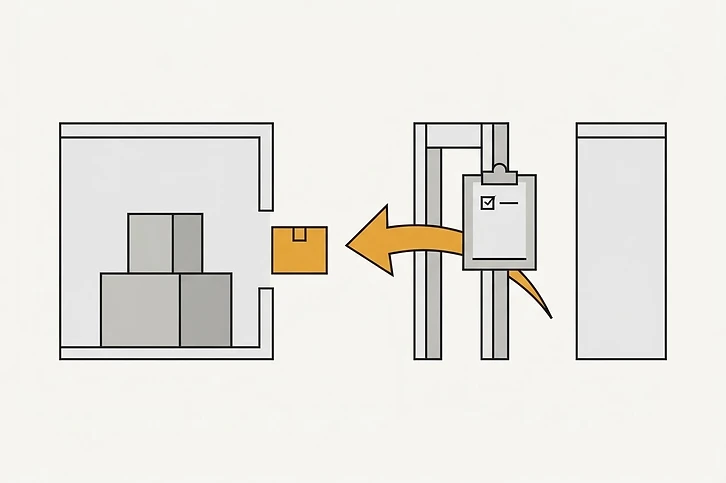
We implement this by wrapping the agent call in a validation loop that provides the raw parser error back to the agent if the schema validation fails.
def validated_agent_call(prompt, schema):
    for attempt in range(3):
        raw_output = model.call(prompt, temperature=0.0)
        try:
            # Strip markdown and validate
            clean_json = raw_output.replace('```json', '').replace('```', '').strip()
            data = json.loads(clean_json)
            validate(instance=data, schema=schema)
            return data
        except (json.JSONDecodeError, ValidationError) as e:
            # Re-prompt the agent with the specific error to enforce self-correction
            prompt = f"{prompt}\nPREVIOUS ATTEMPT FAILED: {str(e)}\nRETRY WITH VALID JSON."
    raise Exception("Max retry attempts reached.")
Advanced Edge Case Handling: The "Panic State"
Edge cases occur when the model encounters inputs that fall outside its logic boundary, causing it to "panic" by outputting unstructured text to explain the error instead of returning a valid JSON payload. We mitigate this by including an error_code field as a mandatory component of our schema, forcing the model to categorize its failure as a deterministic status rather than a prose-heavy excuse.

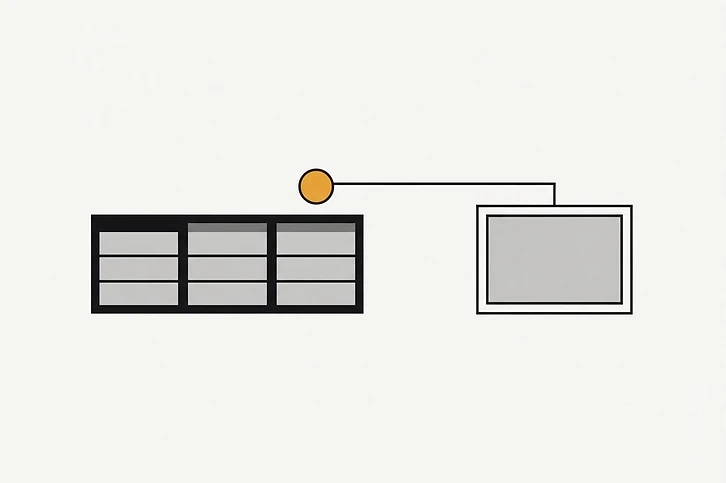
By baking the "Panic State" into your schema, you force the model to acknowledge its inability to fulfill a request while maintaining the structural integrity required by your pipeline.
{
  "properties": {
    "result": { "type": "object" },
    "error_code": {
      "type": "string",
      "enum": ["input_invalid", "insufficient_data", "unauthorized", "system_panic"]
    }
  },
  "required": ["error_code"]
}
When the model detects an unsolvable input, it now returns a valid JSON object with {"error_code": "input_invalid"}. Because error_code is a required schema field, this prevents the parser from breaking, allowing your application code to handle the failure gracefully via business logic rather than catching an unhandled JSON decoding exception.
Want the prompt this article describes, built for your own objective?
Engineer one now — free, no account needed