Fixing Instruction Drop with Systematic Input Ablation
- prompt engineering
- llm debugging
- ai alignment
- inference optimization
- context window

In short
- Instruction adherence fails when input data shares high-frequency semantic features with system constraints, causing signal interference.
- Deterministic testing requires setting temperature to 0.0 and freezing the seed to ensure output changes result solely from prompt modifications.
- Systematic input ablation allows developers to identify and remove specific prompt modules that degrade model performance.
- The most reliable instruction placement is often a 'sandwiched' approach rather than relying solely on primacy or recency.
- Replacing production data with high-entropy filler text helps distinguish between instruction failure and data-induced tone homogenization.
Debugging Instruction Drop via Systematic Input Ablation
When long system prompts fail to execute, developers often erroneously inject more imperative language, which frequently exacerbates the instruction-to-data signal ratio. Systematic input ablation provides a deterministic circuit-testing protocol that removes discrete prompt components to isolate exactly where instruction degradation occurs at scale.
Technical Takeaways
- Instruction adherence is position-dependent: Removing non-critical variable segments in the middle of a context window frequently restores instruction adherence in downstream tokens.
- Performance is tied to signal-to-noise ratios: Instruction drop is more strongly correlated with the semantic similarity between input data and negative constraints than with total token count.
- Deterministic execution is mandatory: Engineers must freeze the
seedand settemperatureto 0.0 to ensure that output variance is strictly a function of the input modification rather than stochastic sampling. - The "Sandwich" failure: Placing constraints exclusively at the end of a long prompt often triggers a recovery-failure mode where the model attempts to reconcile prior data-pattern processing with a contradictory final directive.
The Circuit Testing Framework
The circuit testing framework uses controlled modular removal to map how specific prompt segments influence overall model performance. By treating the system prompt as a sequence of discrete data and instruction modules, we identify and excise the exact segments responsible for instruction decay.

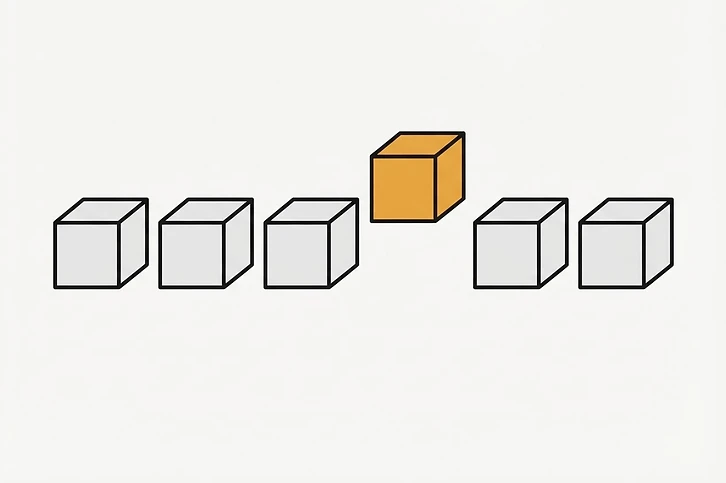
We define the prompt as a sequence of discrete modules $M_1, M_2, \dots, M_n$. We generate a baseline output $O_B$ with the full prompt. We then perform a series of tests where we systematically remove exactly one module $M_i$ from the prompt and record the output $O_i$. If $O_i$ shows higher instruction adherence (measured by a golden dataset) than $O_B$, module $M_i$ is interfering with the model’s primary objective.
The Non-Obvious Cause: Token-Level Semantic Cross-Talk
The primary bottleneck in prompt execution is often semantic cross-talk between data segments and instructional text. When a data-heavy prompt is provided, tokens within the data often share semantic vectors with the constraints. For example, if a system prompt contains the constraint "Do not include dates in the output" and the input data contains thousands of timestamp-formatted logs, the model's self-attention mechanism frequently prioritizes the statistical salience of the data patterns over the instructional tokens. During ablation, you will often find that removing data segments that share high-frequency keywords with your constraints significantly boosts adherence, proving the failure is an instruction override rather than an "attention loss."
Isolating Position-Dependent Decay
Isolating position-dependent decay involves mapping an instruction’s effectiveness against its relative location within the total token context. This process identifies the model’s "blind spots," where specific attention heads fail to bridge the distance between the directive and the objective.
Prompt degradation is rarely a function of total token count; it is a function of instruction density relative to input entropy at specific vector positions. By moving a "control" instruction through different positions, we can map the specific point at which the instruction is effectively dropped from the active context.
# A template for testing instruction position sensitivity
def test_prompt_position(constraint, data_segments, position_index):
    # Insert constraint at a specific index to test for position-based drops
    test_prompt = data_segments[:]
    test_prompt.insert(position_index, constraint)

    # Execute with deterministic settings to isolate position as the variable
    response = client.chat.completions.create(
        model="gpt-4o-2024-05-13",
        messages=[{"role": "system", "content": "\n".join(test_prompt)}],
        temperature=0.0,
        seed=42,
        max_tokens=500
    )
    return response.choices[0].message.content
When This Fails: The "Instruction-Data Homogenization" Effect
The most common production-level failure is the "homogenization" of tone, where the model begins to mirror the structure of the input data rather than the system prompt. If you feed the model conversational user logs, it adopts the logic of the logs and loses its formal directive behavior. You can diagnose this by replacing your production data with "Lorem ipsum" of equivalent length. If the model succeeds with "Lorem ipsum" but fails with your production data, your issue is not the instruction itself, but that your data is statistically indistinguishable from the "voice" of the instructions. The fix is to introduce high-entropy, non-conversational delimiters (e.g., --- DATA_START ---) to force the model to categorize the context as passive content rather than behavioral instructions.
Quantifying Variable Interference
We quantify interference by swapping production data with neutral filler text during the ablation cycle. If the model maintains performance with the filler text, we identify the exact segment of production data that is "overwriting" the system instruction.


The Counterintuitive Result: Beyond Primacy and Recency
Standard advice suggests placing instructions exclusively at the start (primacy) or the end (recency). However, engineering tests demonstrate that placing negative constraints at the end of a long, dense prompt frequently causes a "conflict-induced hallucination" loop. When an instruction is placed only at the end of 20,000+ tokens, the model has already been forced to process data that implies a different, contradictory logic. The abrupt constraint shift triggers a recovery failure where the model attempts to synthesize the bulk of the prompt with the new, final-token mandate. The most stable configuration is a "sandwiched" approach: a high-level heuristic at the start, data in the middle, and a concrete, specific restatement of the constraint at the end. Ablation will show that the model fails more frequently with 2,000 tokens of context ending in an instruction than it does with 2,000 tokens flanked by instructions.
Deployment Strategy for High-Retention Zones
Start your next debugging cycle by isolating a single constraint that is failing and running a five-position shift test—placing it at the 0%, 25%, 50%, 75%, and 100% marks of your prompt. Identify where your success rate drops below 90% and refactor your prompt to ensure all critical instructions sit within the identified high-retention zones. If you are managing multi-step constraints, consult the model's architectural documentation regarding context window limits; if your input exceeds the 128k context limit, the "Lost in the Middle" phenomenon becomes systemic, and no amount of prompt engineering will resolve the instruction drop. Always account for semantic density; if your input data resembles your instructions, your prompt will continue to degrade regardless of position.


Want the prompt this article describes, built for your own objective?
Engineer one now — free, no account needed