Fixing Silent JSON Truncation in LLM Applications
- llm
- json
- python
- engineering
- ai

In short
- Structured output modes do not prevent truncation; max_output_tokens can terminate generation mid-JSON, creating unparseable fragments.
- Naive recovery by appending braces fails because truncated JSON often includes mid-stream primitives or malformed keys.
- Use tokenizer-aware budgeting to set limits, incorporating a safety buffer of at least 25% over the expected schema overhead.
- Monitor API finish_reasons in production to identify when token limits are negatively impacting data integrity.
- Implement programmatic tail-pruning or streaming parser validation to safely extract the last known valid state from truncated responses.
Mitigating Constrained Decoding Truncation with Token Budgeting and Finish-Reason Handling
When using models like gpt-4o or claude-3-5-sonnet with structured output modes, developers often operate under the false assumption that schema integrity is guaranteed until the final byte. In reality, the max_completion_tokens parameter acts as a hard-coded gate that terminates execution regardless of the JSON state, leading to silent truncation where the API returns a 200 OK status despite an incomplete, unparseable payload.
This guide provides an architectural approach to managing token budgets and implementing robust, grammar-aware recovery mechanisms that move beyond naive character appending.
The Mechanics of Silent Truncation
The fundamental failure mode is a decoupling between the model’s logical generation process and the physical token budget limit. Even when structured_outputs is enabled—which forces the model to adhere to a schema—the model generates tokens one by one; if your max_completion_tokens is set to 500 and the model requires 501 tokens to complete the closing }, the API terminates precisely at token 500, leaving a partial string that is fundamentally broken.

The counterintuitive result here is that you aren't just missing a closing brace; you are often left with a mid-stream primitive. If the tokenizer cuts off in the middle of a Unicode sequence or a floating-point number (e.g., 123.4), the resulting string violates the JSON specification at a level that simple brace-counting cannot resolve. You are left with a "broken pipe" of text that renders json.loads() effectively useless without sophisticated state reconstruction.
When this fails
This occurs whenever your max_completion_tokens budget is lower than the model’s required output length, but the failure is most dangerous when the model is tasked with generating long-form reasoning fields within a JSON schema. Because modern models include "thought" or "explanation" tokens within the same budget as the structured JSON, a minor increase in input complexity can cause the model to consume its entire budget on the metadata, causing the JSON payload itself to be truncated mid-key or mid-value.
The Fallacy of Naive Recovery
Many engineers attempt to recover truncated JSON by simply appending } or ]. This approach is functionally invalid in production because it fails to account for incomplete values, trailing commas, or mid-string literals.
A competent engineer understands that JSON is a formal grammar, not just a set of nested brackets. Simply adding closing symbols will result in JSONDecodeError because the parser will still encounter truncated dictionary keys, dangling values, or unterminated string quotes, all of which are fatal to standard parsers.
Production-Grade Recovery Logic
To recover state, you must perform a "token-aware tail-pruning." You identify the last valid top-level key or object and discard everything that follows it, or use a streaming parser to identify the deepest valid sub-tree.
import json
import logging

def recover_truncated_json(raw_text: str):
    """
    Attempts to salvage truncated JSON by identifying the last
    fully completed data structure.
    """
    # 1. Strip the text to the last valid closing brace of a known key-value pair
    # Using a simple regex to find the last complete object structure
    # This is safer than naive brace appending.
    last_brace = raw_text.rfind('}')
    if last_brace == -1:
        return None

    candidate = raw_text[:last_brace + 1]

    # 2. Test parseability
    try:
        return json.loads(candidate)
    except json.JSONDecodeError:
        # If the tail is still malformed, we progressively prune the
        # last key-value pair until the object is valid.
        try:
            # Drop the last element by identifying the last comma and appending a brace
            last_comma = candidate.rfind(',')
            if last_comma != -1:
                return json.loads(candidate[:last_comma] + '}')
        except:
            return None
    return None

def robust_invoke(client, request_params):
    response = client.chat.completions.create(**request_params)
    choice = response.choices[0]

    if choice.finish_reason == 'length':
        logging.warning("Truncation detected. Initiating recovery.")
        recovered_data = recover_truncated_json(choice.message.content)
        if recovered_data:
            return recovered_data
        raise RuntimeError("Data integrity compromise: Truncation unrecoverable.")

    return json.loads(choice.message.content)
Strategic Token Budgeting and Telemetry
The most effective way to handle truncation is to prevent the collision between model output and buffer limits through proactive estimation.

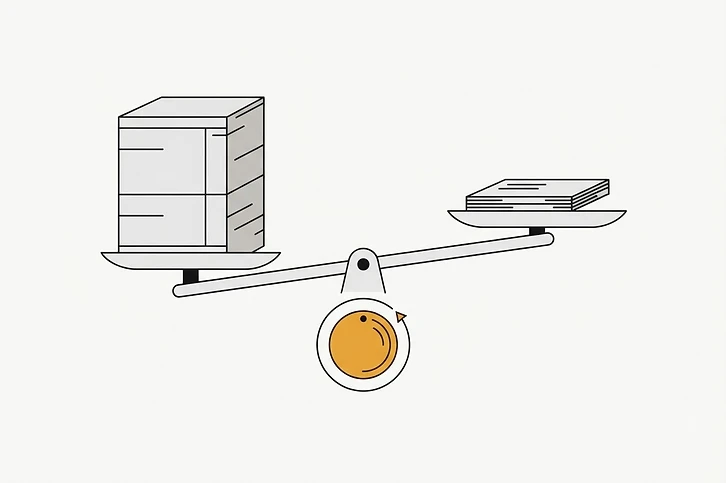
- Tokenizer-Aware Budgeting: Do not use word counts. Use your provider’s tokenizer (e.g.,
tiktokenfor OpenAI) to calculate the byte-size of your schema overhead. If your schema structure (the skeleton of the JSON) is 200 tokens, setmax_completion_tokensas(expected_data_tokens + 200) * 1.25. The 1.25 multiplier accounts for model verbosity fluctuations. - Telemetry as a Trigger: A "length"
finish_reasonshould trigger an automated adjustment in your application configuration. If thefinish_reason: "length"count exceeds 0.5% of your total request volume, yourmax_completion_tokensis effectively a throttle on your application’s reliability. - Schema Minimization: Avoid using large "description" fields within your JSON schema that the model feels obligated to repeat. Every character inside your schema description takes up potential generation space. Keep descriptions concise to ensure the model uses its budget for data, not parsing instructions.
By monitoring finish_reason in real-time, you move from a brittle system that crashes on large inputs to a resilient pipeline that acknowledges the physical limitations of LLM generation and handles them with programmatic grace.
Want the prompt this article describes, built for your own objective?
Engineer one now — free, no account needed