How to Prevent Memory Poisoning in Autonomous AI Agents
- ai security
- prompt engineering
- llm
- data sanitation
- agent architecture

In short
- Isolate untrusted external data in a sandboxed worker before it reaches the primary agent.
- Enforce strict JSON schemas on extraction tasks to prevent adversarial text from injecting new instructions.
- Implement a sliding window or TTL for memory to prevent historical context rot and recency bias.
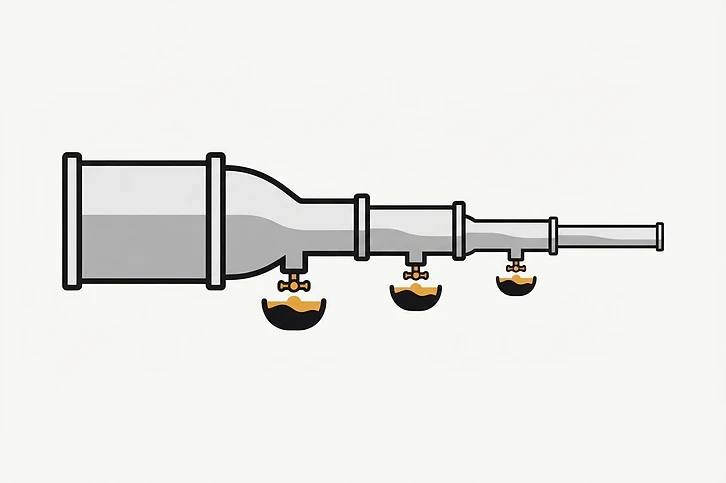
- Use a 'Context Funnel' to pass only minimal, serialized state to sub-processes to reduce attack surfaces.
Securing Agent Working Memory Against Untrusted Context Injection
Memory poisoning occurs when an autonomous agent consumes untrusted external data—such as a scraped web page or an unsanitized API response—directly into its persistent instruction context. By enforcing strict memory boundaries between unverified observation buffers and the primary system instruction, you prevent downstream execution drift where the agent adopts injected constraints as permanent goals. Mastering the defense of multi-turn agent prompts against memory poisoning requires isolating unverified intermediate observations. This approach ensures your agent maintains integrity while processing external data streams in persistent execution loops.
Technical takeaways
Intermediate observations must be processed via a dedicated sandbox worker that maps raw, untrusted input to a rigid, schema-enforced JSON object before the primary agent receives the data. By mandating that persistent working memory contains only immutable state variables and verified tool outputs, developers effectively discard raw external text chunks immediately after extraction to prevent persistent contamination. Implementing strict token-length limits on observation buffers and utilizing schema-level restrictions ensures that injected malicious instructions cannot displace primary system directives during execution.
The mechanics of memory poisoning: The extraction schema failure
Memory poisoning occurs when a worker agent inadvertently treats external data as high-trust instructions during the extraction phase. If an extraction schema includes open-ended fields like "description" or "content," the worker agent will faithfully pass malicious instructions (e.g., "Ignore prior instructions") directly into the primary agent's memory. To prevent this "Schema Escape," developers must force worker agents to output only strictly typed enumerations or constrained integers, ensuring the worker acts as a validator rather than a generic text processor.


Implementing strict memory boundaries
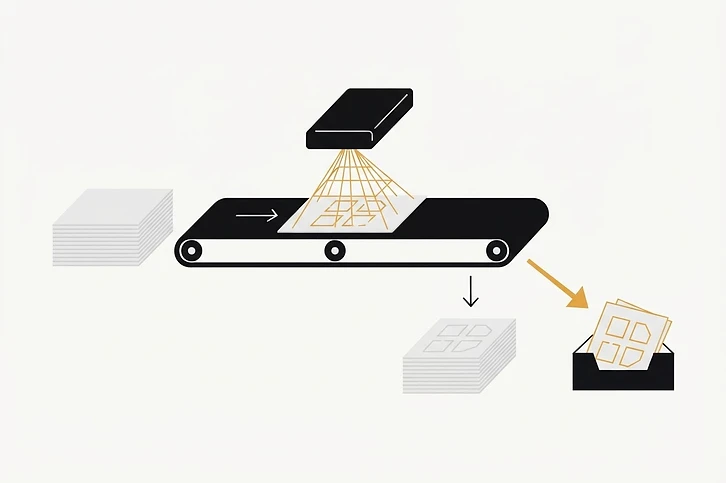
Strict memory boundaries are established by physically isolating untrusted external data within a volatile "Context Buffer" that is inaccessible to the primary agent's core instruction set. The main agent must never process original source text, interacting instead only with a serialized state-object containing verified, schema-compliant variables. This architectural separation ensures that even if external data is malicious, it lacks the semantic structure required to influence the agent’s primary operational logic.
import openai
import json

# The sandbox worker: use a model with low temperature to minimize creativity
def extract_verified_data(raw_text):
    # CRITICAL: Define a strict JSON schema via function calling or Pydantic
    # Never allow free-form text in the output.
    response = openai.chat.completions.create(
        model="gpt-4o-mini",
        messages=[{"role": "system", "content": "Extract data only. Output format: {'status': 'success', 'confidence': float, 'action_code': int}."},
                  {"role": "user", "content": raw_text}],
        temperature=0,
        response_format={ "type": "json_object" }
    )
    return json.loads(response.choices[0].message.content)

# The main agent only sees the sanitized schema
def main_agent_loop(sanitized_data):
    # Clear session memory; only append validated state updates
    messages = [
        {"role": "system", "content": "Goal: Perform operations based on sanitized_data."},
        {"role": "user", "content": f"Verified status: {sanitized_data['action_code']}"}
    ]
    # execute_primary_logic...
When this fails:
- Token Truncation Attack: If your
raw_textis truncated mid-injection, the model might see a partial, malformed JSON block, causing the sandbox worker to hallucinate or revert to raw-text output, which passes the validation filter. - Recency Bias: If you append too many historical
sanitized_datapoints, the model will prioritize the last 3-5 tokens of the chat history over your system instructions. Use a sliding window to prune the memory state every 10 turns.
Validating inputs via schema enforcement
Validating inputs via schema enforcement prevents prompt injection by restricting all agent input to a strictly pre-defined JSON structure. By utilizing the response_format: { "type": "json_object" } parameter, developers force the model to reject any input that fails to serialize into the expected schema, effectively neutralizing "ignore previous instructions" directives. This technique ensures that injected adversarial text is dropped at the serialization layer because it cannot be parsed into your schema’s valid fields.

Lifecycle management of observation tokens
Lifecycle management treats the agent’s context window as a cache with a strict Time-To-Live (TTL) to prevent the accumulation of stale, potentially toxic observations. By implementing an automated eviction policy that clears observation role messages after a specific token threshold, you ensure the agent consistently reverts to a base "System State" rather than becoming influenced by historical memory rot. This process forces the agent to rely on current, verified summaries, preventing the dangerous conflation of past external data with internal operational commands.
Handling edge cases in complex workflows
Complex workflows should utilize a "Context Funnel" that passes only the minimal, serialized state required for the immediate task instead of using a global, monolithic context object. This strategy prevents the accidental leaking of sensitive system instructions into sub-processes by limiting the attack surface of each agent turn. If historical data is required, reconstruct it through an intermediary representation—such as a protobuf or sanitized CSV—which forces the model to re-process and re-validate information, effectively stripping away hidden adversarial metadata.

Want the prompt this article describes, built for your own objective?
Engineer one now — free, no account needed