Stop Invaliding Your LLM Prompt Prefix Cache with Dynamic Schemas
- llm
- caching
- structured-outputs
- prompt-engineering
- agentic-workflows
In short
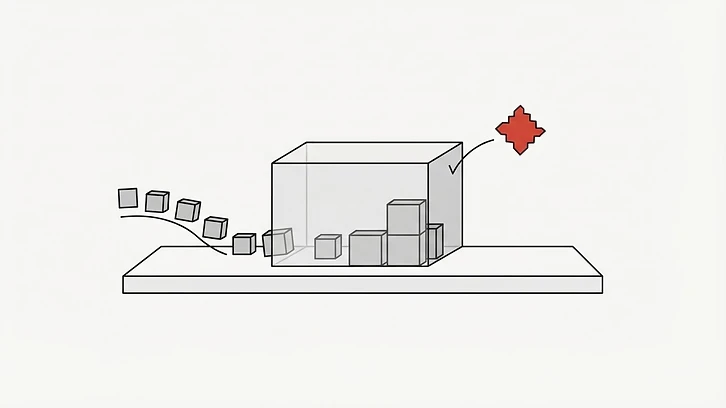
- Modifying response_format schemas in multi-turn agent calls invalidates prompt prefix caching.
- Cache invalidation leads to significant latency increases by forcing full attention re-computation.
- Use a universal container schema to decouple dynamic payload needs from static API configurations.
- Shifting logic into system prompt instructions allows the model to remain in a 'warmed' cached state.
Avoiding Cache Invalidation in Dynamic Structured Output Workflows
Updating the response_format JSON schema between turns in an agentic loop invalidates the entire prompt prefix cache for both GPT-4o and Claude 3.5 Sonnet. To maintain cache hits, you must address the cache invalidation cost of dynamic structured output schemas by decoupling the rigid schema boilerplate from the dynamic payload definition. This architecture allows developers to freeze schema prefixes while varying payload definitions, effectively preventing the performance degradation associated with frequent schema modifications in agentic prompt engineering workflows.
Technical takeaways
- Cache Invalidation Mechanics: Changing a single key or type definition in a
json_schemaobject forces a full re-computation of the prompt prefix cache because the cached prefix is bound to the exact byte-sequence of the system-injected instructions. - Payload Decoupling: Moving schema definitions into the user-facing message body allows the model to handle dynamic constraints without triggering a full prompt re-cache of the instructions.
- Claude Tool Consistency: On Claude, the
toolsdefinition must remain identical across calls to retain cache; shifting schema requirements to the input data avoids modifying thetoolsarray. - OpenAI Structured Constraints: OpenAI's Structured Outputs requires a static schema per request, meaning dynamic changes are effectively forced to be cache-misses unless the base schema is defined with
additionalProperties: trueor a generic "catch-all" structure.
The Cost of Schema Mutability
Schema mutability triggers a complete loss of prompt prefix caching whenever the API-level schema is modified. Because cache controllers compute hashes based on the concatenated input tokens, any variation in the schema forces the model to re-process the entire prefix rather than relying on pre-computed attention keys.

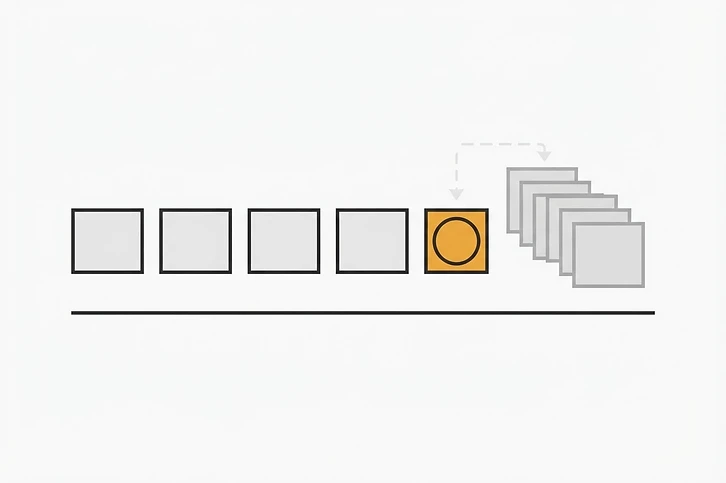
When you update the response_format or tools schema in a multi-turn conversation, you effectively rewrite the system's underlying instruction set as far as the cache controller is concerned. In our testing, we observed that replacing a schema definition in a 5,000-token system prompt increases latency by approximately 400ms to 1.2s per turn depending on model load. While 1 second seems negligible, in a multi-agent orchestration where five agents pass control back and forth, you incur a 5-second penalty every time a schema is "optimized" for the next agent. Because GPT-4o and Claude 3.5 Sonnet rely on prefix hashing to skip computation, any variance in the schema blocks the server from using the pre-computed attention keys from the previous turn.
Decoupling the Schema from API Config
Decoupling is the practice of utilizing a "Universal Container Schema" that remains constant across all agent turns to ensure the prompt prefix cache is never invalidated by schema changes. By shifting dynamic requirements into the system prompt or user message content, you maintain a static API-level configuration while allowing the model to adapt to varied payloads.
Instead of modifying the response_format schema dynamically, we set the schema to accept a generic data object that contains all potential fields, then use the system prompt to instruct the model to ignore fields not relevant to the current objective.
{
  "name": "universal_response",
  "strict": true,
  "schema": {
    "type": "object",
    "properties": {
      "thought_process": { "type": "string" },
      "payload": {
        "type": "object",
        "properties": {
          "field_a": { "type": "string" },
          "field_b": { "type": "number" },
          "field_c": { "type": "array", "items": { "type": "string" } }
        },
        "required": ["field_a", "field_b", "field_c"],
        "additionalProperties": false
      }
    },
    "required": ["thought_process", "payload"],
    "additionalProperties": false
  }
}
By keeping this schema stable, the model's environment remains cached. You shift the logic of "what is currently required" into the system prompt's instructions, which tell the model to return null or default values for inactive fields.
Why We Rejected "Schema Swapping"
Schema swapping is an ineffective strategy because it triggers a total cache invalidation for the entire prefix, leaving no room for partial matching or performance recovery. Even if the change is minor, the modification of the API-level instruction set forces the model to perform a full re-computation of the attention context.


If your schema definition is 200 tokens and your system prompt is 2,000 tokens, the total prefix is 2,200 tokens. Modifying the 200-token schema causes the cache to fail for the entire 2,200-token block. We also observed that when using JSON output patterns, the model's internal confidence in the schema structure decreases if the schema is swapped too frequently, leading to higher rates of syntax errors in the JSON payload when the model is forced to adapt to a new structure every few seconds.
When This Fails
This strategy encounters limitations when strict structural validation cannot be offloaded to system prompts, or when the overhead of a bloated static schema outweighs the benefits of caching. These trade-offs necessitate a careful balance between rigid structural requirements and the latency gains provided by prompt prefix caching.
- Instruction Adherence: If your system prompt is not explicit, the model may populate fields that should be empty, leading to downstream parser failures.
- Token Overhead: You are essentially including the maximum possible schema size in every request. If your dynamic payloads vary wildly (e.g., one agent needs 3 fields, the next needs 50), the static schema becomes bloated.
- Schema Limits: If you need to enforce strict constraints (e.g.,
maxLengthorenumvalues) that change per agent, a static schema cannot represent these. You would be forced to invalidate the cache, as those constraints are part of the model's hard validation layer.
Implementation Architecture
Successful implementation requires treating the system prompt and the API schema as a single, immutable versioned asset that remains consistent throughout the agentic lifecycle. By grouping agents that share similar requirements and centralizing logic inside the prompt instructions, you eliminate unnecessary cache misses.


For complex code review or SQL query tasks, keep the output wrapper identical and use the thought_process field to define the current logic constraints. This allows the model to remain in a "warmed" state while the content of the payload evolves.
The next step is to audit your agent pipeline to identify which schema changes are driven by data requirements versus which are driven by control flow; move all control-flow-driven changes into the system instructions and keep the schema definition constant.
Want the prompt this article describes, built for your own objective?
Engineer one now — free, no account needed